 quoture
A quotation image can give you a name, an attractive sentence, and no way to connect the two. Repetition does not repair the missing connection. A useful verification process asks for a text you can inspect and a location within it.
The goal is not to reject every line you cannot find in a minute. It is to describe your confidence accurately. An exact quotation, a translated passage, and an unattributed saying can all be interesting. They should not be presented as the same kind of evidence.
Begin with the claimed work
If a post names a book, search within a reliable copy of that book. Try a distinctive phrase rather than a common word. Check nearby wording and punctuation. An image may have modernized spelling or omitted a clause, so a failed exact search is a clue rather than a final verdict.
If no work is named, look for a source that supplies one. Prefer a reference that shows the passage and locator over a page that repeats the same author credit. Ten pages copying an unsupported line do not become ten independent sources.
Separate wording from attribution
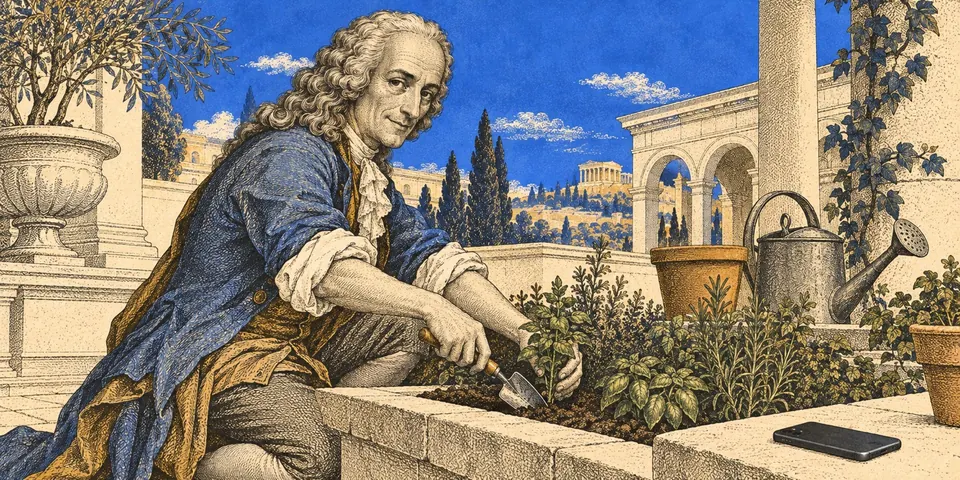
A line can be accurately quoted but attributed too broadly. Candide speaks the garden reply in Voltaire’s novel. Calling it a line from Candide preserves the fictional speaker and the work. Saying only “Voltaire said” loses part of that relationship.
Translation adds another layer. An English phrase can be genuine to one translation without being the author’s original wording. Record the translator and edition when possible. If you rewrite a translated passage in simpler English, label your version as a paraphrase.
Inspect the locator
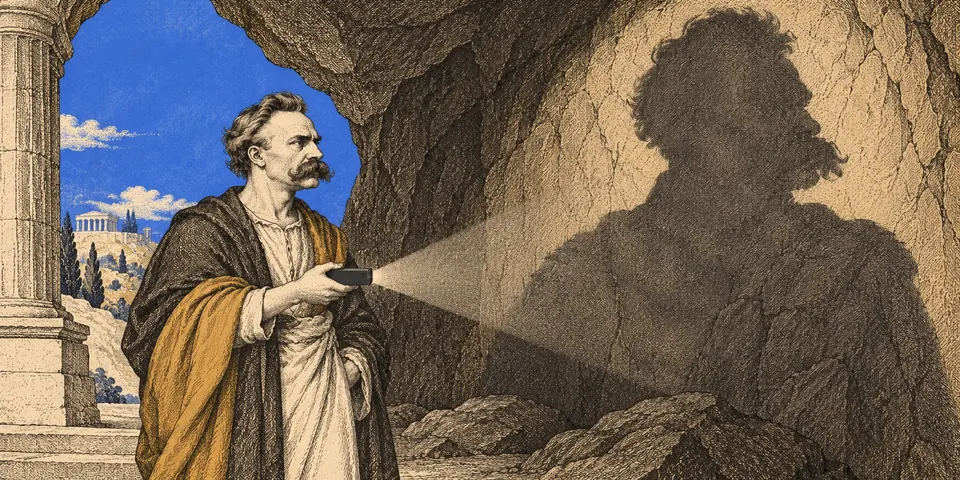
A useful citation points to a chapter, section, letter, speech, or other identifiable place. In Nietzsche’s The Joyful Wisdom, the cave and shadow image is in aphorism 108. The well-known phrase about the death of God also appears elsewhere. A citation to a different section is not necessarily evidence for the whole passage you are sharing.
Open the reference and read enough to see the connection yourself. A working link proves that a page exists. It does not prove that the words appear there, that the attribution is right, or that the excerpt keeps the original meaning.
Use honest labels when evidence is incomplete
“Attributed to” signals a claim that still needs support. “Paraphrase” tells the reader you have changed the wording. “Excerpt” indicates that you have selected part of a larger passage. These labels are useful only when the underlying distinction is real, not when they decorate an uncertain claim with authority.
When you cannot establish a source, say so. You can still discuss the thought without borrowing a famous person’s name. “I like this idea, but I have not verified the attribution” is more informative than a confident credit you cannot defend.
Keep a small source note
Save the wording, author or speaker, title, locator, translator, and link together. Add a sentence about what you checked. If a correction arrives later, you can find the exact claim that needs changing.
That is the habit behind Quoture’s source-led approach. It does not make errors impossible. It makes a quotation easier to inspect, discuss, and correct. Our editorial policy explains the limits and how to report a problem.