 quoture
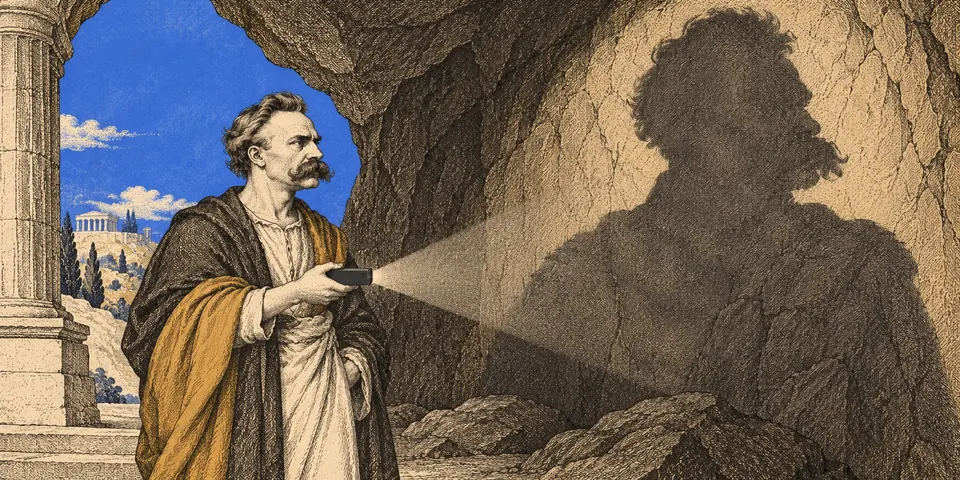
“God is dead” does not mean that Nietzsche believes a physical deity has recently died. In aphorism 108 of The Gay Science, he uses the image of a lingering shadow to ask what happens after a source of authority is no longer believed. A belief can lose its force while the habits built around it remain.
The edition linked here is titled The Joyful Wisdom, translated by Thomas Common. The Gay Science is another English title for the work. The aphorism is numbered 108 and headed “New Struggles.” Those details help you find the passage instead of relying on a line detached from its setting.
The shadow in the cave
Nietzsche begins with an image of people showing Buddha’s shadow after Buddha’s death. He then imagines shadows of God remaining for a long time. The passage does not supply a source for the story about Buddha, so it is safer to describe it as Nietzsche’s image here than as an independently established historical event.
The point is the persistence of an influence. Rejecting a belief does not automatically remove every expectation, value, or pattern of explanation associated with it. A person can change a stated position more quickly than the habits through which they understand the world.
What counts as a shadow?
Consider someone who stops accepting an authority but still measures every decision by that authority’s standards. The rejection is explicit; the old framework still shapes what feels admirable, shameful, or meaningful. That is one way to understand the image without pretending to list every shadow Nietzsche has in mind.
The passage asks for more than replacing one label with another. If a framework has organized a culture’s judgments, its disappearance leaves work to do. Which assumptions still operate? Which values can be defended on another basis? What does a person mistake for an obvious truth because it is familiar?
Why the phrase is not a victory slogan
Read alone, the words can sound like a triumphant announcement that an argument is over. The shadow image points the other way. Nietzsche describes a continuing struggle. The consequences of a change in belief are not exhausted by announcing that change.
This does not require a reader to agree with his criticism of religion. A religious reader can still understand the structure of his challenge. Understanding a philosophical argument and accepting it are separate tasks.
Keep different passages distinct
The work returns to the death of God elsewhere, including aphorism 125. The cave and shadow passage is 108. A quotation assembled from multiple sections can hide the differences between their images and speakers. If you discuss the shadow, give the number of the shadow passage.
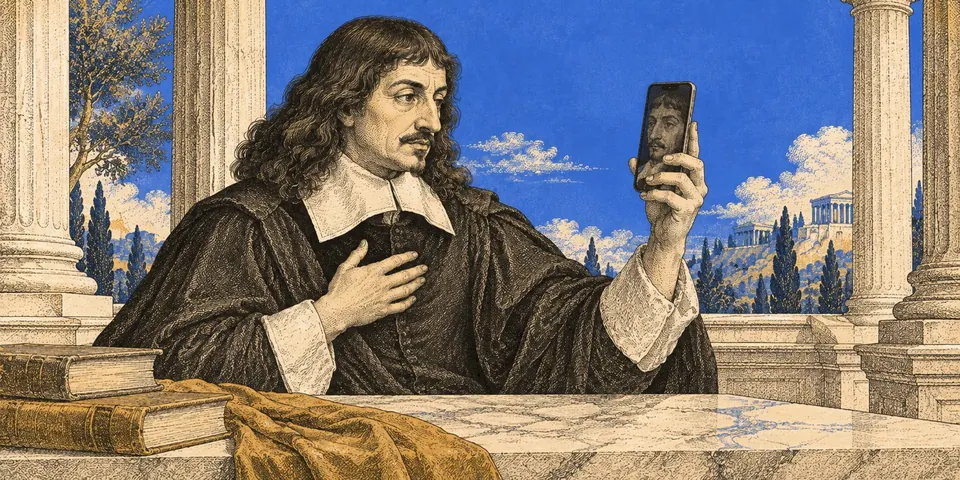
This is a good example of why a famous phrase needs a locator as well as an author. Our guide to checking quote sources gives a practical method. For a different argument about belief and certainty, compare Descartes’s cogito rather than assuming all philosophical doubt has the same purpose.