 quoture

A philosophy quote can be a good entrance to an idea. It can also make an argument disappear. The shorter the excerpt, the easier it is to miss who is speaking, what problem they are addressing, and whether the line is a conclusion, a provocation, or a joke.
You do not need to read an entire library before enjoying one sentence. You need a small method that adds context without turning every encounter into homework. The following questions work well as a starting point.
Ask who is actually speaking
An author’s name does not always identify the speaker. A novelist can write a sentence for a character whose opinions the novel challenges. A dialogue can contain several positions. A letter can offer advice shaped by one person’s circumstances.
Candide’s reply about a garden belongs to a character in Voltaire’s novel. Naming that fact does not prevent you from discussing Voltaire’s criticism. It makes your account more precise: the criticism emerges through a scene rather than a standalone declaration.
Find a source small enough to use
A title is helpful, but a chapter, section, letter, or aphorism number is better. Page numbers can change across editions. A structural locator often survives that change, although numbering can vary too.
Attach the translator when wording matters. Two English translations may express the same argument differently. Neither similarity nor difference alone proves that an internet version is fabricated. First establish which text you are comparing.
Read one paragraph before and after
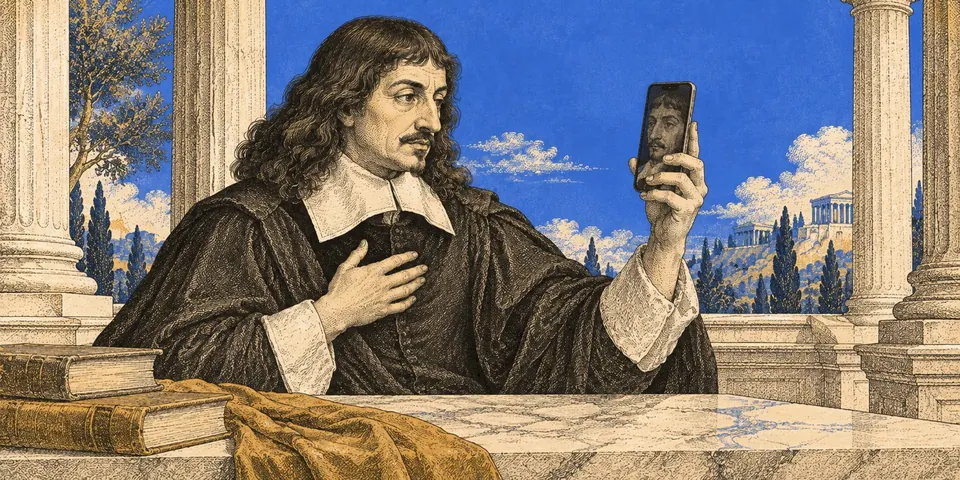
Look for the question the passage answers. Descartes’s cogito follows an attempt to doubt familiar sources of knowledge. Without that setup, the phrase can sound like motivational advice about the power of thought. With the setup, it becomes an argument about certainty.
Notice connecting words. “But,” “therefore,” and “although” often carry the movement of the argument. An excerpt that drops them can preserve attractive words while reversing their function. Sometimes the most important part of a quote is the sentence that makes it less comfortable.
Explain the thought without the famous wording
Try a two-sentence explanation. First describe the setting. Then describe what the speaker wants you to reconsider. For the garden scene: Pangloss keeps explaining how earlier disasters led to their present circumstances. Candide turns toward the shared work that keeps the household alive.
If your explanation only says that the quote is profound, inspiring, or timeless, it has not yet done much work. Name the actual distinction. Is it between influence and control, explanation and justification, appearance and knowledge, or private and shared welfare?
Give the idea a limit
An example makes an abstract claim easier to understand. A limit stops the example from pretending to prove everything. The garden can encourage practical care, but it does not show that every social problem can be fixed by private effort. A distinction about control can clarify responsibility without erasing real constraints.
This habit also makes conversation easier. You can say what you understand, why it interests you, and where you remain unsure. That gives another person something to respond to, which is more useful than a famous name at the end of a sentence.
Start with one of our source-led reading notes. Keep the source and your interpretation together, and let one thought become a question worth following.